

Knee Replacement Surgery: A Complete Patient Guide
Knee pain can silently steal your independence. Whether it’s difficulty climbing stairs, standing for long hours, or even walking short distances, chronic knee pain can severely affect your quality of life. If medications, physiotherapy, and lifestyle changes no longer provide relief, knee replacement surgery may be the most effective and long-lasting solution.
In this detailed guide, we will cover everything you need to know about total knee replacement, partial knee replacement, knee replacement cost, recovery time, risks, benefits, eligibility, procedure steps, and how to choose the best knee replacement surgeon.
What is Knee Replacement Surgery?
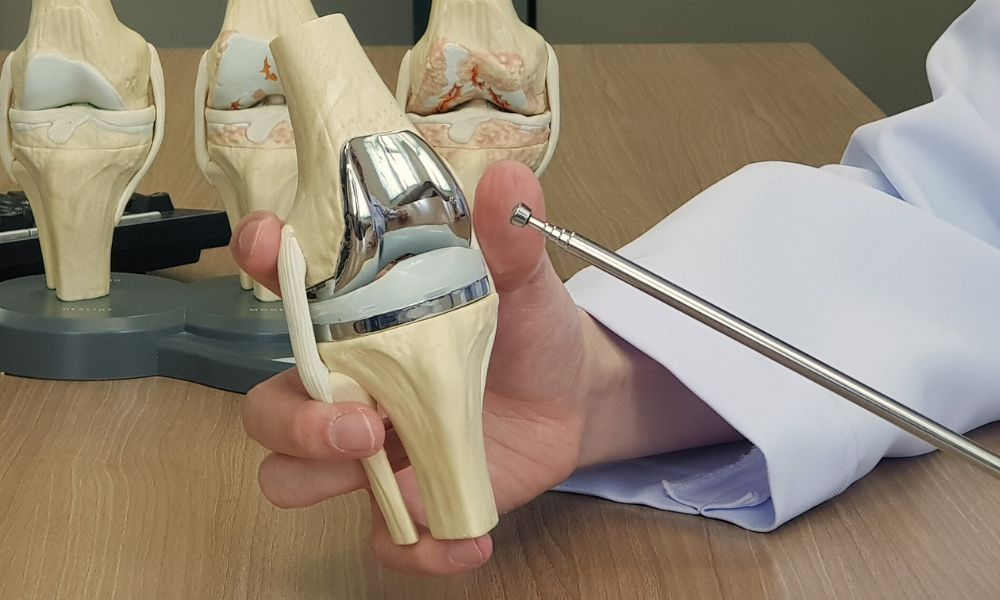
Knee replacement surgery, also known as knee arthroplasty, is a surgical procedure in which damaged cartilage and bone in the knee joint are removed and replaced with artificial components (implants).
The most common reason for knee replacement is severe osteoarthritis, but it may also be recommended for:
- Rheumatoid arthritis
- Post-traumatic arthritis
- Severe knee injury
- Advanced joint degeneration
- Chronic knee pain not responding to treatment
The goal is simple:
✔ Relieve chronic knee pain
✔ Restore mobility
✔ Improve quality of life
Types of Knee Replacement Surgery
Understanding the different types helps patients make informed decisions.
1. Total Knee Replacement (TKR)
In total knee replacement, the entire knee joint surface is replaced with prosthetic components. This is the most commonly performed procedure worldwide.
Best for:
- Advanced osteoarthritis
- Severe joint damage
- Long-term pain
2. Partial Knee Replacement (PKR)
Also called unicompartmental knee replacement, this procedure replaces only the damaged portion of the knee.
Best for:
- Limited arthritis
- Younger, active patients
- Damage confined to one compartment
3. Bilateral Knee Replacement
Both knees are replaced either in a single surgery or staged separately.
Best for:
- Severe arthritis in both knees
Who is the Ideal Candidate for Knee Replacement?
You may be a candidate if you have:
- Persistent knee pain even at rest
- Stiffness limiting daily activities
- Knee swelling that doesn’t improve
- Failed non-surgical treatments
- Severe joint damage on X-rays
There is no strict age limit. While most patients are between 50–80 years old, even younger patients may undergo knee replacement if medically necessary.
Signs You May Need Knee Replacement
High-search keywords patients often ask about include:
- “When do I need knee replacement?”
- “Is knee replacement painful?”
- “How long does knee replacement last?”
Common signs include:
- Difficulty walking more than a few minutes
- Trouble climbing stairs
- Deformity in knee alignment
- Pain interfering with sleep
If your lifestyle is significantly affected, it’s time to consult a knee replacement specialist.
Knee Replacement Procedure: Step-by-Step
Understanding the procedure reduces fear and anxiety.
Step 1: Anesthesia
Spinal or general anesthesia is administered.
Step 2: Incision
A surgical incision is made over the knee.
Step 3: Removal of Damaged Tissue
Damaged cartilage and bone are removed carefully.
Step 4: Implant Placement
Metal and medical-grade plastic components are fitted to recreate smooth joint movement.
Step 5: Closure
The incision is closed and bandaged.
The surgery typically takes 1 to 2 hours.
Advanced Techniques in Knee Replacement
Modern technology has improved outcomes dramatically.
✔ Robotic Knee Replacement
More precision, better alignment, and faster recovery.
✔ Minimally Invasive Knee Replacement
Smaller incision, less tissue damage, quicker healing.
✔ Computer-Assisted Surgery
Improved implant positioning for long-term success.
Knee Replacement Cost
One of the most searched queries is: “Knee replacement cost”
The cost depends on:
- Type of surgery (total or partial)
- Hospital facilities
- Implant brand
- Surgeon’s expertise
- City and country
In India, the knee replacement cost typically ranges between ₹1,50,000 to ₹3,50,000 per knee.
Robotic knee replacement may cost slightly higher.
Always choose quality and expertise over cheap alternatives.
Benefits of Knee Replacement Surgery
Patients often experience:
✔ Significant pain relief
✔ Improved mobility
✔ Better sleep
✔ Enhanced quality of life
✔ Long-lasting results (15–25 years)
Most modern implants last 20+ years with proper care.
Risks and Complications
Although knee replacement surgery is highly successful (over 95% success rate), possible risks include:
- Infection
- Blood clots
- Implant loosening
- Nerve injury
- Stiffness
Choosing the best knee replacement surgeon and following post-operative instructions minimizes risks.
Knee Replacement Recovery Timeline
Recovery is one of the most common concerns.
First Week
- Walking with support
- Pain controlled with medication
2–6 Weeks
- Physical therapy
- Gradual improvement in mobility
3 Months
- Resume most daily activities
6 Months
- Near complete recovery
Full recovery may take 3 to 6 months, depending on age, health, and physiotherapy compliance.
Role of Physiotherapy After Knee Replacement
Physiotherapy is crucial. It helps in:
- Regaining muscle strength
- Improving flexibility
- Preventing stiffness
- Speeding up recovery
Skipping exercises can delay healing.
Life After Knee Replacement
Patients often ask:
Can I climb stairs?
Yes, after recovery.
Can I sit cross-legged?
Generally not recommended after total knee replacement.
Can I drive?
Usually after 4–6 weeks.
Can I travel?
Yes, after 6 weeks with precautions.
Low-impact activities like walking, cycling, and swimming are encouraged.
How Long Does a Knee Replacement Last?
Modern implants last 15 to 25 years. Longevity depends on:
- Weight management
- Activity level
- Implant quality
- Surgical precision
Younger patients may require revision surgery later in life.
Choosing the Best Knee Replacement Surgeon
Selecting the right surgeon is critical.
Look for:
- Experience in total knee replacement
- High surgical success rate
- Expertise in robotic knee replacement
- Strong patient reviews
- Advanced hospital infrastructure
Always discuss:
- Implant type
- Expected recovery
- Possible complications
- Total cost
Preparing for Knee Replacement Surgery
Before surgery:
- Maintain healthy weight
- Control diabetes and blood pressure
- Stop smoking
- Strengthen leg muscles
- Arrange home support
Preparation improves recovery outcomes.
Knee Replacement vs Knee Pain Treatment Without Surgery
Before recommending surgery, doctors usually try:
- Pain medications
- Steroid injections
- PRP therapy
- Physiotherapy
- Weight management
Surgery is advised only when conservative treatments fail.
Myths About Knee Replacement
❌ “Knee replacement is only for old people.”
✔ Not true. Younger patients may also need it.
❌ “Recovery takes years.”
✔ Most recover in 3–6 months.
❌ “Implants don’t last long.”
✔ Modern implants last decades.
Emotional & Psychological Benefits
Chronic knee pain affects mental health. After successful surgery, patients often report:
- Improved mood
- Better confidence
- Increased social activity
- Higher productivity
Knee replacement is not just about mobility — it restores independence.
Frequently Asked Questions (FAQs)
Is knee replacement surgery painful?
Pain is controlled with modern anesthesia and medications.
What is the success rate?
Over 95% success rate globally.
When can I walk after surgery?
Most patients walk within 24 hours with support.
Is robotic knee replacement better?
It offers improved accuracy and alignment.
Final Thoughts
If knee pain is limiting your life, knee replacement surgery can be life-changing. With advanced technology, improved implants, and skilled surgeons, outcomes today are better than ever.
Don’t let fear delay treatment. Consult a qualified knee replacement specialist and take the first step toward pain-free living.
References & Resources
- American Academy of Orthopaedic Surgeons (AAOS) – https://orthoinfo.aaos.org
- National Institute of Arthritis and Musculoskeletal and Skin Diseases – https://www.niams.nih.gov
- World Health Organization (WHO) – https://www.who.int
- Mayo Clinic – https://www.mayoclinic.org
- NHS UK – https://www.nhs.uk

