

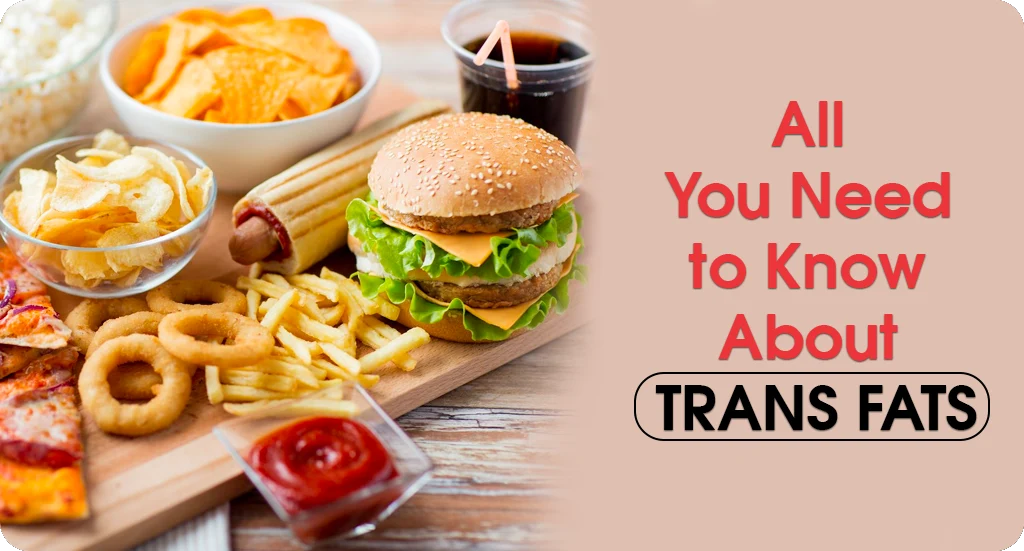
Trans Fats: What’s the Big Deal? Health Risks, Sources & How to Avoid Them
You may have heard doctors, nutritionists, or health experts say, “Avoid trans fats.” But what exactly are trans fats, why are they considered dangerous, and should you be worried about the foods you eat every day?
The answer is important because trans fat is not just another type of dietary fat. It has no known health benefit and can increase the risk of heart disease when consumed in excess.
From biscuits and cakes to fried snacks, bakery products and some processed foods, trans fats can sometimes hide in foods that appear harmless. In India, ingredients such as vanaspati, bakery shortening and partially hydrogenated oils have historically been important sources of industrially produced trans fat.
The good news? You don’t need to eliminate all fats from your diet. Instead, you need to understand which fats to limit, which fats to choose, and how to identify potentially harmful trans fats.
Let’s break it down.
What Are Trans Fats?
Trans fats, also called trans fatty acids (TFAs), are a type of unsaturated fat.
They can occur naturally in small amounts in foods from ruminant animals, such as milk, butter, cheese and meat. However, the bigger dietary concern is industrially produced trans fat.
Industrial trans fats are traditionally created when liquid vegetable oils undergo a process called partial hydrogenation. This changes the structure of the oil, making it more solid and stable at room temperature.
Why was this process used?
Because partially hydrogenated oils could help foods:
- Stay fresh for longer
- Have a desirable texture
- Remain stable during processing
- Improve shelf life
- Be relatively inexpensive for food manufacturers
The problem is that this convenience comes with a significant health cost.
According to the World Health Organization (WHO), trans fat has no known health benefits, and industrially produced trans fats should be avoided as part of a healthy diet.
Why Are Trans Fats So Harmful?
One of the biggest concerns about trans fat is its effect on cholesterol and cardiovascular health.
Trans fat can:
- Increase LDL or “bad” cholesterol
- Lower HDL or “good” cholesterol
- Increase the risk of coronary heart disease
- Contribute to unhealthy blood lipid levels
- Increase the risk of cardiovascular events over time
The FDA notes that consuming trans fat raises LDL cholesterol, and elevated LDL cholesterol increases the risk of heart disease.
In simple terms, think of your arteries as roads carrying blood throughout your body. A long-term unhealthy diet can contribute to processes that make these “roads” narrower or less healthy.
And trans fat is one of the dietary factors that can make cardiovascular health worse.
How Much Trans Fat Is Too Much?
This is where an important distinction comes in.
The WHO recommends that trans fat should provide less than 1% of total daily energy intake. For someone consuming 2,000 calories a day, that is less than approximately 2.2 grams of trans fat per day.
But here’s the more important message:
Less is better.
Because trans fat has no known health benefit, there is little reason to deliberately include it in your diet.
WHO recommends avoiding industrially produced trans fats wherever possible and replacing them with healthier fats, particularly unsaturated fats.
Which Foods Can Contain Trans Fats?
Trans fat may be present in foods that are highly processed, fried or made using certain fats.
Potential sources include:
1. Vanaspati
Vanaspati and similar partially hydrogenated vegetable fats have historically been important sources of industrial trans fats in India.
They may be used in certain commercial foods, sweets, bakery products and fried preparations.
2. Bakery Products
Some commercially prepared:
- Biscuits
- Cakes
- Pastries
- Puffs
- Cookies
- Doughnuts
- Pie-type products
- Cream-filled baked products
may contain trans fats depending on the ingredients used.
3. Fried Foods
Repeatedly heated or commercially used frying oils can be a concern for overall dietary quality. WHO notes that high-temperature frying can modestly increase trans fat concentrations, although the increase is much smaller than the amounts historically associated with partially hydrogenated oils.
This doesn’t mean that every fried food automatically contains large amounts of trans fat.
However, frequent consumption of deep-fried foods is generally not a healthy dietary habit, regardless of the trans fat content.
4. Processed Snacks
Some packaged snacks and processed foods may contain industrial fats depending on their formulation.
That’s why checking the ingredient list can be useful.
5. Restaurant and Street Foods
Commercially prepared fried and baked foods can potentially contain industrially produced trans fats, depending on the oils and fats used.
WHO specifically identifies fried and baked street and restaurant foods as potential sources.
Is “Trans Fat-Free” Always Completely Free of Trans Fat?
Not necessarily.
Food labelling rules differ between countries, and a product that carries a “zero” or “free” claim may still contain very small amounts within the applicable regulatory threshold.
Therefore, don’t look at just one number on the nutrition label.
Check the ingredient list too.
Look for terms such as:
“Partially hydrogenated oil” or “partially hydrogenated vegetable oil.”
These are important warning signs for industrial trans fat.
That said, food regulations have changed considerably in many countries, and manufacturers have reformulated many products to eliminate partially hydrogenated oils.
What About Trans Fat in Milk, Butter and Meat?
This is a common source of confusion.
Small amounts of naturally occurring trans fats are present in foods from ruminant animals, including cows, goats and sheep.
These naturally occurring trans fats are chemically different in origin from industrially produced trans fats, but WHO states that both naturally occurring and industrially produced trans fats are harmful.
This does not mean you should panic about consuming normal portions of dairy or completely eliminate them from your diet.
The bigger practical goal is to reduce your overall intake of trans fat and choose a balanced diet.
Trans Fat vs Saturated Fat: Are They the Same?
No.
Both are types of dietary fat, but they are chemically and nutritionally different.
Trans fats are particularly concerning because they can raise LDL cholesterol while lowering HDL cholesterol.
Saturated fats can also raise LDL cholesterol when consumed in excess, but they are not the same thing as trans fats.
This is why replacing trans fats with healthier unsaturated fats is generally a better strategy than simply replacing them with another type of unhealthy fat.
Healthy sources of unsaturated fats include foods such as:
- Nuts
- Seeds
- Avocado
- Fish
- Soy
- Certain vegetable oils
WHO recommends replacing unhealthy fats with polyunsaturated or monounsaturated fats as part of a healthy dietary pattern.
What Is India Doing About Trans Fats?
India has taken important regulatory steps to reduce industrially produced trans fats.
The Food Safety and Standards Authority of India (FSSAI) introduced regulations limiting industrial trans fatty acids in foods. The limit was reduced to 2% by mass of the total oils/fats present in the product from January 2022.
This is an important step toward reducing exposure to industrial trans fats in the Indian food supply.
However, regulations cannot replace individual food choices.
Consumers should still be aware of what they are eating, particularly when consuming highly processed, commercially fried or bakery foods frequently.
7 Simple Ways to Reduce Trans Fat in Your Diet
You don’t need a complicated diet plan to reduce trans fat.
Start with these practical changes:
1. Read the Ingredient List
When buying packaged foods, look for partially hydrogenated oil.
If you see it, consider choosing another product.
2. Cut Down on Ultra-Processed Snacks
Biscuits, cakes, pastries, packaged fried snacks and similar foods should be occasional foods rather than everyday staples.
3. Limit Deep-Fried Foods
Enjoying a samosa or pakora occasionally is different from eating fried foods every day.
The goal is frequency and portion control.
4. Choose Healthier Cooking Fats
Use appropriate vegetable oils and vary your sources according to your dietary needs and local guidance.
Avoid assuming that replacing trans fat with unlimited amounts of another fat automatically makes a food healthy.
5. Eat More Whole Foods
Build your meals around:
- Vegetables
- Fruits
- Whole grains
- Pulses
- Beans
- Nuts
- Seeds
- Appropriate protein sources
A whole-food-based diet naturally leaves less room for highly processed foods.
6. Be Careful With Bakery Foods
You don’t necessarily need to completely eliminate your favourite cake or pastry.
But having these foods occasionally instead of daily can make your overall diet healthier.
7. Don’t Believe Every “Healthy” Label
Words such as “light,” “natural,” “multigrain” or “low cholesterol” do not automatically mean a food is healthy.
Read the nutrition information and ingredient list.
Can You Completely Avoid Trans Fat?
For most people, the practical goal should be to minimize industrially produced trans fat, rather than becoming anxious about every trace amount.
Modern food regulations have significantly reduced industrial trans fat in many food supplies. However, trans fat can still occur naturally in some animal foods and may be present in certain products depending on formulation and regulation.
The WHO’s recommendation remains clear: industrial trans fats are not part of a healthy diet and should be avoided.
The Bigger Picture: Don’t Fear All Fats
One of the biggest mistakes people make after learning about trans fat is thinking:
“All fats are bad.”
That’s not true.
Your body needs dietary fat for several important functions, including absorption of fat-soluble vitamins and providing energy.
The important question isn’t simply:
“How much fat am I eating?”
It is:
“What kind of fat am I eating?”
Instead of focusing only on removing fat, focus on improving fat quality.
Replace foods containing industrial trans fats with foods containing healthier unsaturated fats and build your diet around minimally processed foods.
Final Takeaway
Trans fat may be small in quantity, but its impact on health can be significant.
Regular consumption of industrially produced trans fat can negatively affect cholesterol levels and increase cardiovascular risk. That’s why health authorities around the world have worked toward eliminating it from the food supply.
The good news is that you can take simple steps today:
Read labels.
Limit highly processed foods.
Reduce frequent deep-fried and bakery foods.
Avoid partially hydrogenated oils.
Choose healthier unsaturated fats.
Eat more whole foods.
You don’t have to give up every favourite food.
You simply need to make healthier choices more often.
And when it comes to trans fat, the simplest rule is perhaps the most useful:
Less trans fat. Better heart health.
Medical Disclaimer: This article is intended for general health education and awareness. It does not replace personalized medical or nutritional advice. People with heart disease, diabetes, high cholesterol or other medical conditions should discuss their individual dietary requirements with a qualified healthcare professional or registered dietitian.
Sources & References
- World Health Organization (WHO) – Trans Fat Fact Sheet
WHO: Trans Fat - World Health Organization (WHO) – Healthy Diet
WHO: Healthy Diet - U.S. Food and Drug Administration (FDA) – Trans Fat
FDA: Trans Fat - U.S. Food and Drug Administration – Partially Hydrogenated Oils
FDA: Final Determination on Partially Hydrogenated Oils - Food Safety and Standards Authority of India (FSSAI) – Trans Fat Regulations
FSSAI: Trans Fat Information - World Health Organization – REPLACE Trans Fat Action Package
WHO: REPLACE Trans Fat

